How Does Sites Reservoir Actually Work? The Engineering Explained

How Does Sites Reservoir Actually Work? The Engineering Explained
A 1.5-million-acre-foot reservoir sounds impressive — but how does it actually function? Understanding the engineering helps you appreciate why this project matters so much, and what it means for the communities surrounding it.
Off-Stream — and That Changes Everything
Traditional reservoirs dam a river, flood a valley, and disrupt fish migration in the process. Sites Reservoir works differently. It's an off-stream reservoir, meaning no river is blocked and no valley is flooded.
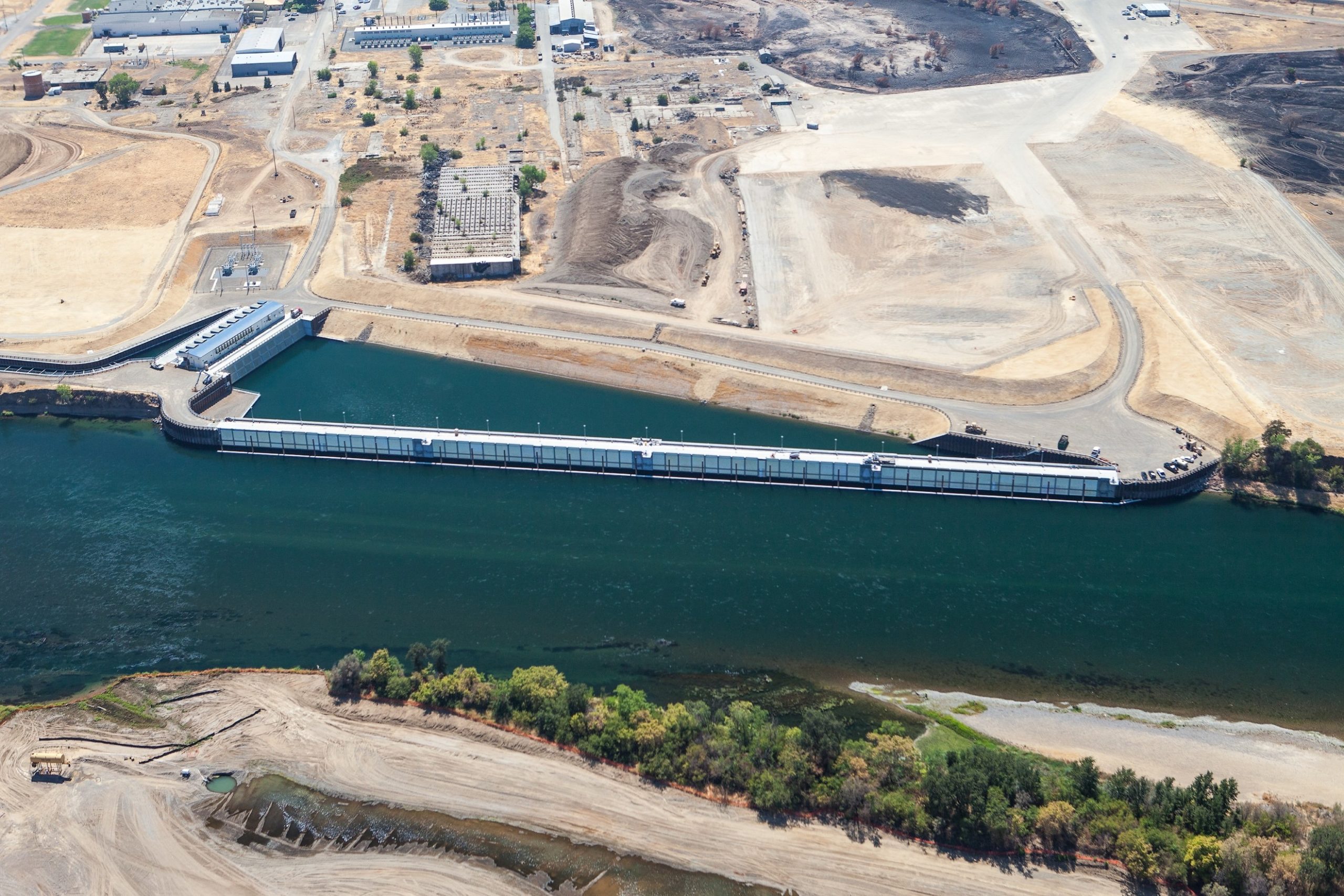
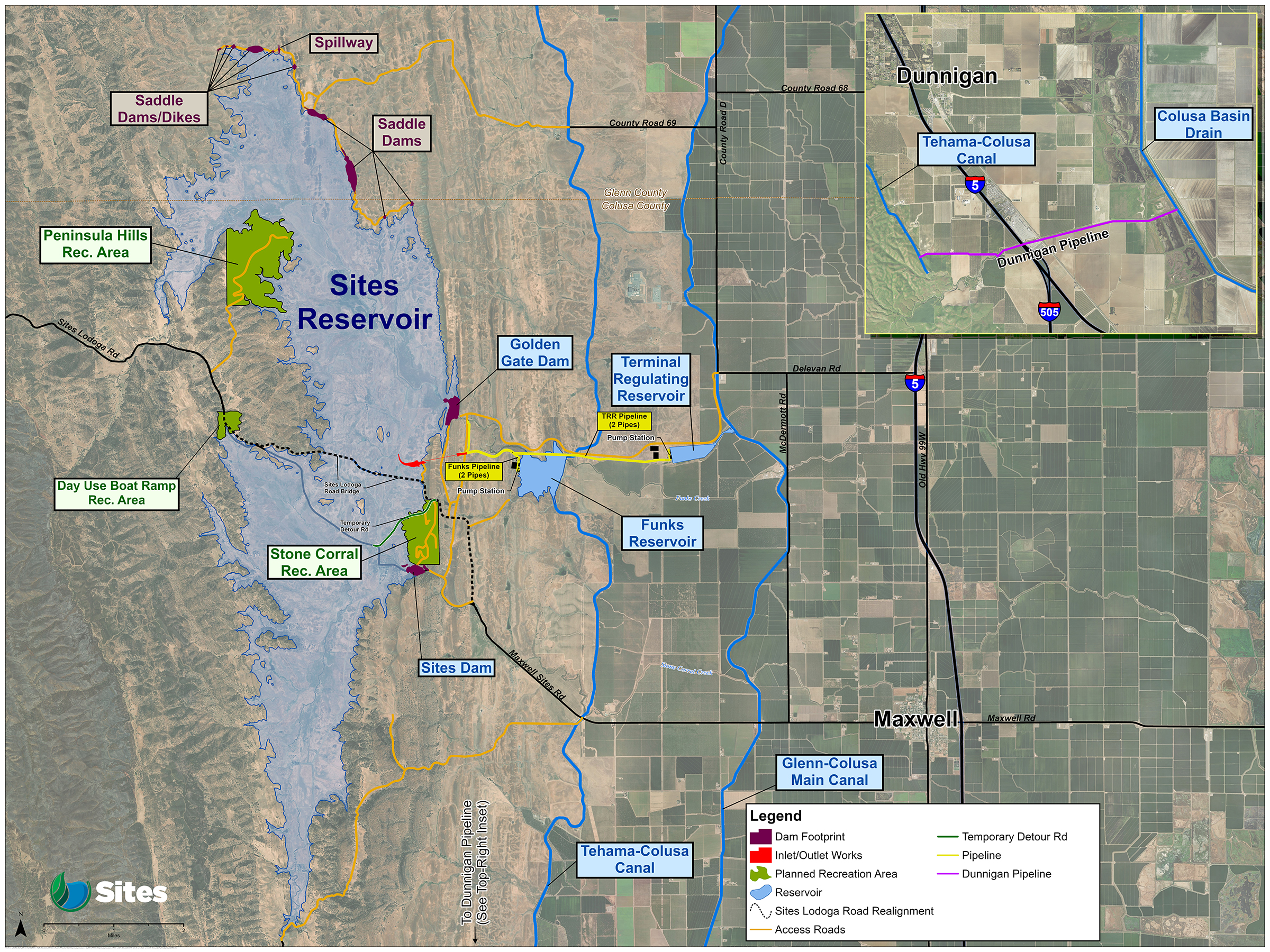
During major storms, when the Sacramento River runs high, water is diverted at two existing points — Red Bluff and Hamilton City — and moved through existing canal infrastructure to the reservoir site about 14 miles away in the grasslands west of Maxwell. When stored water is needed during drought or a dry summer, it's released through canals and a new pipeline near Dunnigan, re-entering the Sacramento River system.
No fish migration is disrupted. In fact, Sites Reservoir will actively benefit salmon by releasing cooler stored water to maintain healthier river temperatures during critical periods.
What Gets Built
Major Construction Elements
- Two main dams and seven saddle dams plus two saddle dikes
- Pumping facilities and pipeline infrastructure
- Inlet/outlet works including a dedicated Inlet/Outlet Tower
- Two full public recreation areas
- Significant road construction and improvements
- New conveyance infrastructure connecting to State Water Project and Central Valley Project systems
- Total land footprint: approximately 16,000 acres
The Two Construction Packages
Reservoir & Roads
Dams, reservoir basin, roads, and site infrastructure. Awarded to Barnard Construction in January 2026.
Conveyance
Pumping stations and pipeline infrastructure. Currently in contractor procurement.
Why the Sacramento Valley?
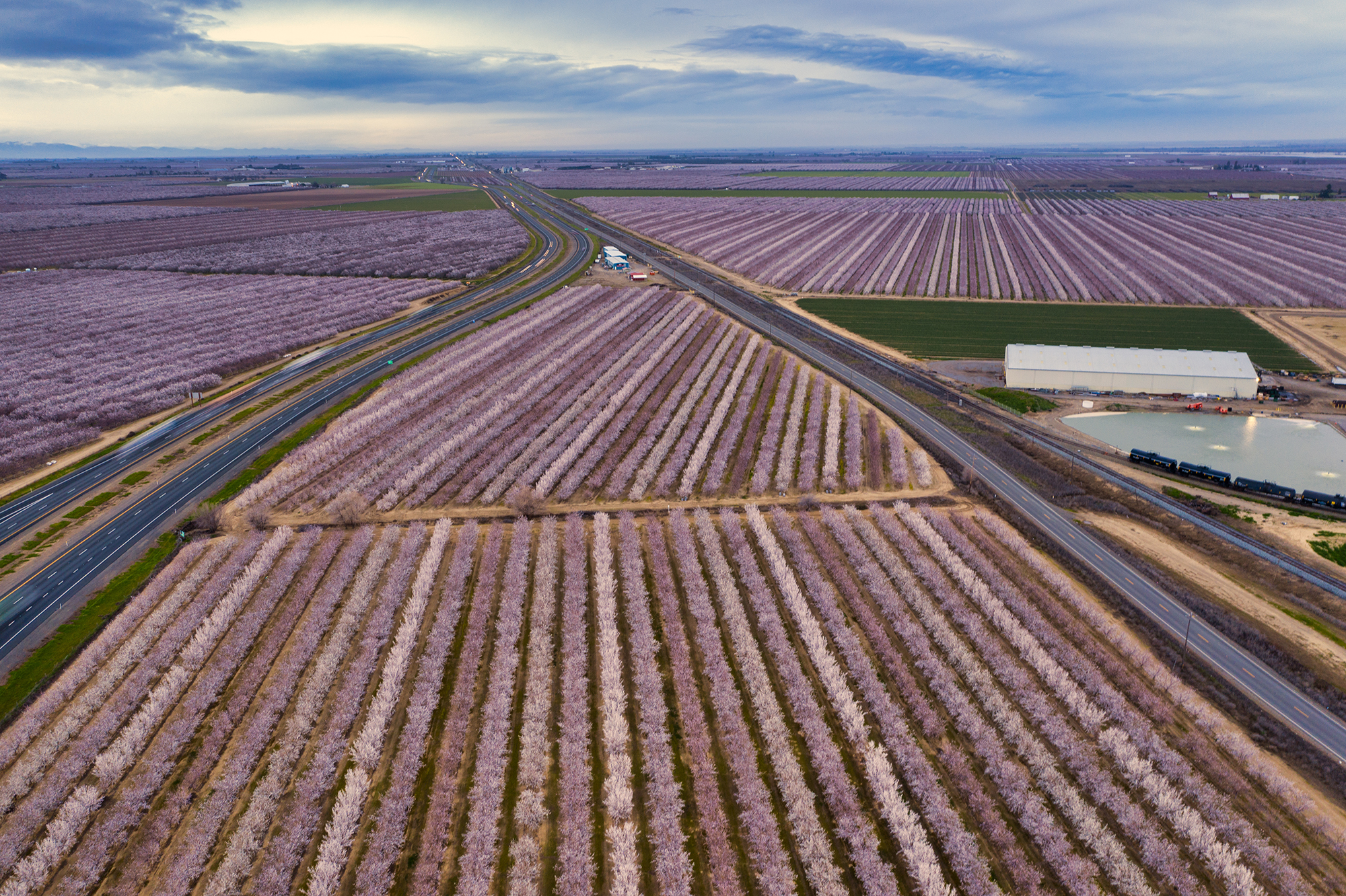
The region's geography is uniquely suited to this purpose. The broad valley floor is flanked by rolling foothill terrain that creates natural bowl-like topography — ideal for off-stream storage without requiring massive additional earthworks. Existing canal infrastructure means water can be moved efficiently without building entirely new systems from the ground up.
This location has been considered for a reservoir for over 70 years. The science and geography have always made sense. What changed is the urgency — California's climate is shifting, and flexible storage has become a necessity.
Workers need places to live. Contractors need staging areas and office space. Businesses need to support a workforce that will number in the thousands at peak construction. The commercial real estate that supports all of this becomes critically important — and scarce — fast.
Next up: Post 3 explores what may be Sites Reservoir's most remarkable feature — its unprecedented commitment to environmental water storage.
I have commercial properties in Williams and Delevan positioned to serve this construction-driven demand.
Call or text: 530-635-6185
@realshawniihone
Recent Posts